



Lagos: A City with History and Sea
Lagos is a historic city in Portugal’s Algarve, where centuries of history remain closely connected to the Atlantic. Long before its beaches and dramatic cliffs shaped its international image, its coastal position made Lagos an important port, a departure point for maritime expeditions and the setting for significant chapters of Portuguese history. Today, that past can still be traced through the walls, churches, squares and buildings of its historic centre.
Lagos had a long history before the Age of Exploration
The relationship between Lagos and the sea began centuries before the city became associated with Portuguese maritime exploration. The ancient name Lacobriga is linked to the early communities that settled in this part of the Algarve, followed by different Mediterranean influences and, later, Roman occupation.
During the Islamic period, the settlement was fortified and its urban structure developed further. In 1249, Lagos was incorporated into Portuguese territory following the Christian conquest of the Algarve. Its position on the southern coast would continue to shape the city's development for centuries.
Traces of this long history remain visible today. The historic centre, the city walls and the proximity of the old harbour all tell the story of a place whose identity developed in constant contact with the Atlantic.
The 15th century placed Lagos at the heart of Portuguese maritime expansion
Lagos gained particular importance during the 15th century, becoming one of the main bases for early Portuguese voyages along the African coast. The city was closely associated with the maritime activity promoted by Prince Henry the Navigator, and expeditions departed from its harbour during this period. Among the navigators connected with Lagos was Gil Eanes, known for passing Cape Bojador in 1434.
The growing maritime activity brought ships, merchants and new construction to the city. Lagos expanded in both size and importance, strengthening a relationship with the ocean that remains part of its identity today.
LAGOS IN FOUR MOMENTS Four dates that help explain the city1249 15th century 1573 1755 |
A difficult chapter in the history of Lagos
The growth of Lagos during the 15th century was also connected to the trafficking of enslaved people from Africa. The city became one of the earliest European arrival and trading points for people captured during Portuguese expansion along the African coast.
This history is addressed today in the historic centre, near Praça Infante D. Henrique, at the Slavery Route Museum. The museum provides important context for understanding Portuguese maritime expansion alongside the human consequences that formed part of the same period.
-
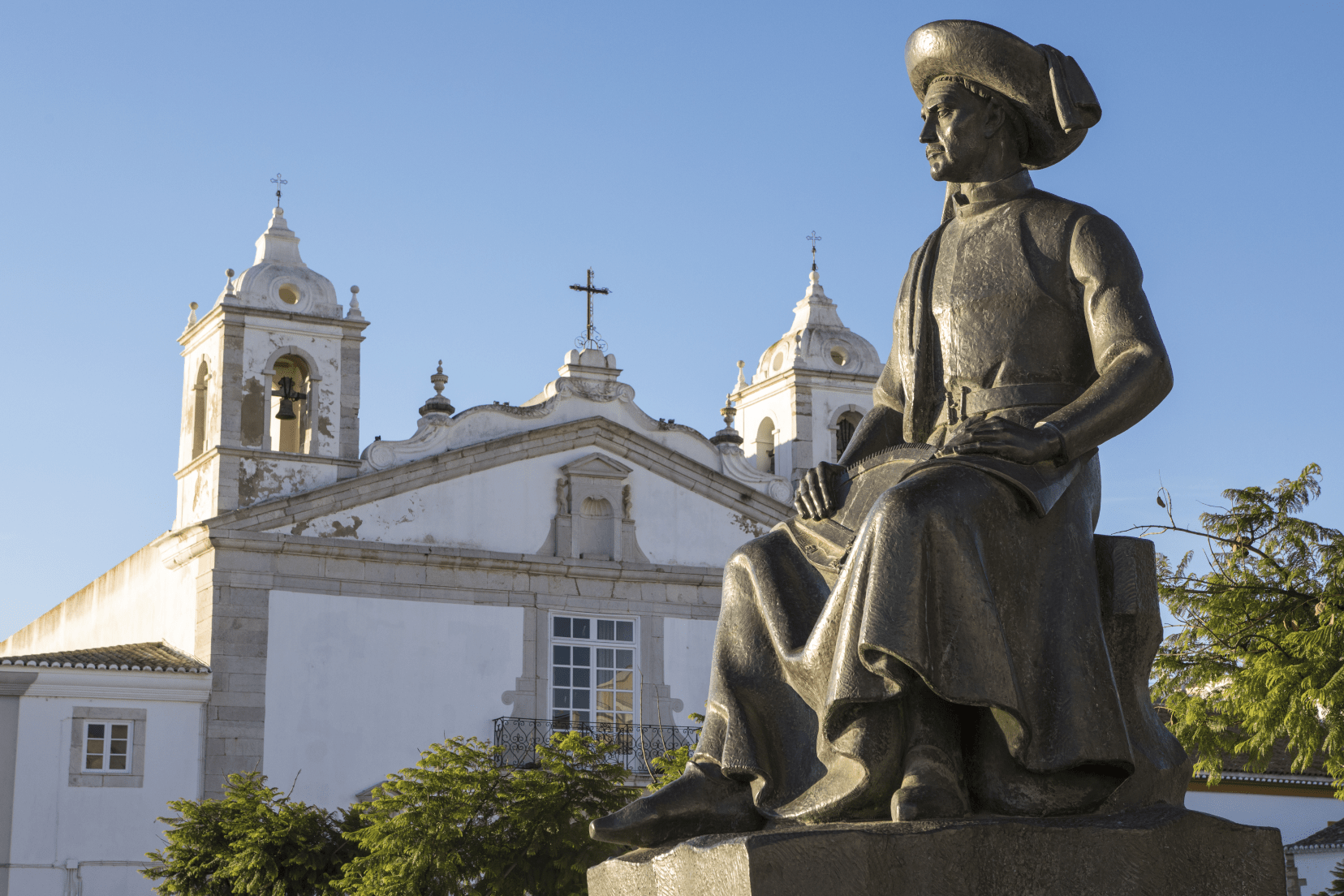
D. Henrique - Lagos

Centuries later, another event would transform Lagos dramatically. On 1 November 1755, the earthquake and tsunami that struck the Portuguese coast destroyed a significant part of the city. Lagos lost some of the political and administrative importance it had gained during previous centuries, and recovery took decades.
The city seen today also reflects that process of rebuilding. Some buildings survived, while others were restored or reconstructed, leaving the historic centre with traces of several different periods in the history of Lagos.
The history of Lagos is still visible across the city
A walk through the historic centre reveals many of these traces. The city walls and Governors' Castle recall the defensive importance of Lagos, while Ponta da Bandeira Fort, built in the 17th century beside the old harbour, reflects the strategic role of protecting the city from attacks arriving by sea.
The Church of Santo António offers a different perspective, with a richly decorated Baroque interior featuring gilded woodwork and 18th-century tiles. Nearby, in Praça Infante D. Henrique, the Slavery Route Museum explores the city's involvement in the trafficking of enslaved people during Portuguese Atlantic expansion.
This close proximity between different periods is one of the most interesting aspects of the historic centre. Within a short walk, visitors encounter defensive structures, religious buildings, places associated with maritime exploration and sites that preserve the memory of some of the city's most difficult historical chapters.
DISCOVER LAGOS From the historic centre to the Lagos coastlineUnderstanding the city's history can also change the way Lagos is experienced today. Its beaches and cliffs remain an essential part of the landscape, but they can easily be combined with a morning in the historic centre, a walk beside the walls or a visit to the places that preserve different chapters of the city's past. The Editory offers three different places to stay in Lagos: Aqualuz Lagos by The Editory, The Editory By The Sea Lagos and The Editory Residence Lagos. |
Lagos remains closely connected to the Atlantic. But among the walls, churches and squares of its historic centre, it becomes clear that the sea is only one place to begin understanding the city.
Related articles
-

- Algarve
Where to stay in the Algarve: why Lagos is one of the best areas
Choosing where to stay in the Algarve depends on the kind of trip you have in mind. Some travellers…
26 Feb 2026 -

- Algarve
The Editory By The Sea Lagos: Official Opening by the Sea
On June 5, The Editory By The Sea Lagos celebrated its official opening with a special party that br…
12 Jun 2025

