



How Travel Has Changed in Portuguese Cities
Exploring a city no longer necessarily means crossing it with a map in hand and ending the day with a checklist of monuments. Some trips are shaped around a neighbourhood, a restaurant we want to try, a morning with no plans or simply the desire to walk and see what is happening around us. In Portuguese cities, streets, markets, gardens and cafés create different urban rhythms, making it possible to discover each destination one part at a time.
Sometimes stepping off the itinerary is part of the journey
There are places we want to see as soon as we arrive in a city. But some of the best discoveries begin when we wander away from the itinerary.
Monuments, museums and historic landmarks are still part of what draws us to a city. What has changed is the need to fill every day with one sight after another. There is room to wander through a neighbourhood without a particular destination, step inside a small shop, stop in a square or stay a little longer over coffee while watching the city around us.
Walking reveals another side of urban travel. In Porto, walking from downtown Baixa towards Ribeira follows the streets all the way to the Douro. In Lisbon, following the Tagus and wandering into Alfama reveals a different side of the city. In Coimbra, the climb towards the University takes you through streets where local businesses, heritage and student life coexist. The neighbourhood is no longer somewhere we simply pass through; it becomes part of the experience.
We still want to see the places that made each city famous, but we also want to understand how its neighbourhoods connect, where people meet and what happens between the places marked on the map.
Some cities are also discovered at the table
Food has also taken on a different role in city breaks. A market can become the first stop of the morning, a restaurant can take us into another neighbourhood and a local bakery can inspire a detour that changes the rest of the day.
Across Portuguese cities, municipal markets, historic cafés, small local eateries, contemporary restaurants and regional products offer another way to understand a destination through everyday life. Not every meal needs to be planned in advance: sometimes a spontaneous choice along the way leads us somewhere we would never have found otherwise.
Exploring a city now involves a different set of choices: where to walk, where to eat, which neighbourhood to spend the afternoon in and what to leave for another visit. And once seeing everything in a single trip is no longer the goal, two decisions become particularly important: how long to stay and which part of the city to stay in.
-
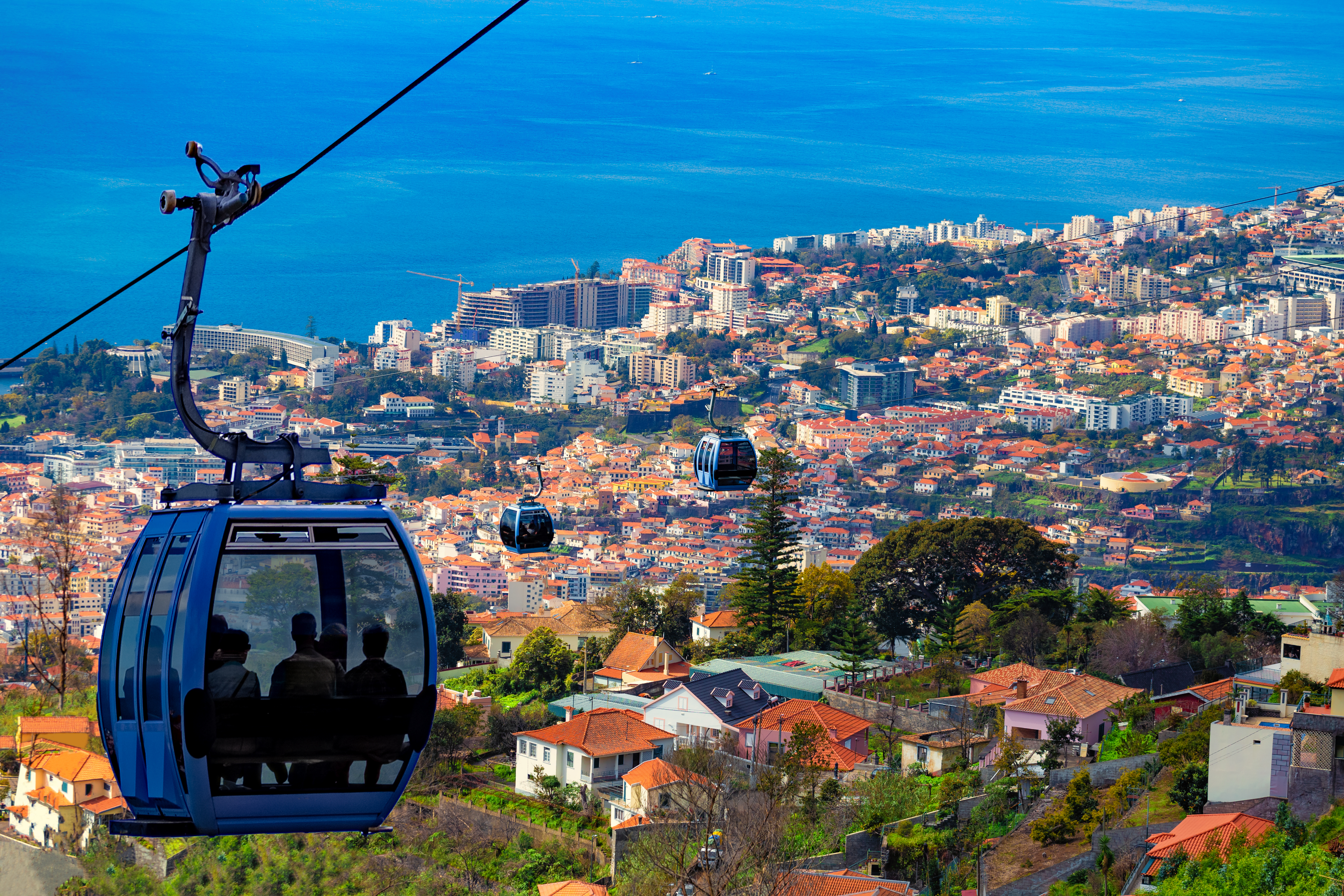
Funchal Teleférico

A few days are enough to discover part of a city
A city break does not need to last a week to feel worthwhile. A weekend, a public holiday or a two- or three-day escape can be enough when the aim is not to cover every attraction, but to choose one part of the city and explore it properly. A neighbourhood, a few places we genuinely want to visit and time between stops can already shape the trip.
This is one reason short breaks work particularly well in Portuguese cities. Within many urban centres, heritage, local food, shops, gardens and cultural life can be combined in the same day, with much of the city explored on foot. Leaving something out does not make the trip incomplete; it simply gives us somewhere to begin next time.
It is also the idea behind micro travel. Instead of waiting for a long holiday, a short trip can focus on one city or even one part of it. Two days in Porto do not need to tell the whole story of the city: they might begin in Baixa, continue towards Ribeira, cross the Douro and leave Boavista for another visit.
Where you stay changes the city you experience
When time is limited, choosing where to stay becomes particularly important. The location of your hotel influences where the morning begins, how easily you can return during the day and which neighbourhoods you end up discovering without ever having added them to the itinerary.
It also changes the relationship we develop with a city. After two or three days, the café near the hotel might become the place where we have breakfast, the street we walk along each evening starts to feel familiar and we discover which routes we prefer to take on foot. Where we stay is therefore not simply a practical question of location.
In Porto, staying near Ribeira puts the Douro and the historic centre at the beginning of many routes, while Boavista reveals a city of broad avenues, culture and contemporary spaces. In Lisbon, Santa Apolónia brings Alfama, the Tagus and some of the city's historic neighbourhoods within easy reach. In Coimbra, staying close to the University makes it easy to begin exploring through the streets of the historic centre and continue towards the Mondego.
ONE CITY, DIFFERENT STARTING POINTS Where you stay is part of the journeyPorto Lisbon Coimbra Funchal Viana do Castelo |
Perhaps this is one of the biggest changes in the way we travel: a city no longer needs to feel finished when we return home. There can still be a neighbourhood to explore, a restaurant we did not get to try or a street we only glimpsed in passing. Discovering a city in stages also gives us a reason to return.
Porto, Lisbon, Coimbra, Funchal or Viana do Castelo can be the destination for one short break or the beginning of several. The point is not necessarily to come home having seen everything, but to leave knowing the city a little better than when we arrived.
Related articles
-

- Cities
- Getaways
Where to go in Portugal in April: cities and spring getaways
April changes the way Portugal invites you to travel. The days begin to draw you outdoors, but a get…
27 Mar 2026 -

- Cities
Cities to visit in Portugal that are best discovered on foot
Some cities make more sense when you put the map away for a while. Lisbon, Porto, Coimbra and Viana…
12 Mar 2026 -

- Cities
How Many Days in Porto? What Changes After the Second Night
Are two nights enough to explore Porto? It depends on the kind of trip you have in mind. Over a week…
05 Feb 2026


