



Cities to visit in Portugal that are best discovered on foot
Some cities make more sense when you put the map away for a while. Lisbon, Porto, Coimbra and Viana do Castelo have very different landscapes and scales, but they share one thing: walking connects neighbourhoods, landmarks, markets, gardens and streets that are easily missed when moving quickly from one attraction to the next. If you are looking for cities to visit in Portugal on a short break, these four are good reasons to pack comfortable shoes.
Portugal on foot: four cities, four different walks
From Lisbon's hills to the streets along the Lima in Viana do Castelo, walking through a city reveals distances, changes between neighbourhoods and small details that disappear when we move too quickly.
A walkable city does not necessarily have to be flat or small. Lisbon and Porto prove exactly that. What makes these destinations rewarding to explore on foot is the possibility of creating routes that connect several important parts of the city while discovering cafés, shops, gardens, squares and streets along the way.
Lisbon: from the hills to the Tagus
In Lisbon, walking means accepting the hills. In return, those climbs and descents connect some of the city's most distinctive areas. A walk through Alfama can begin near Santa Apolónia, continue through the neighbourhood towards Lisbon Cathedral and then lead to the viewpoints, São Jorge Castle or Baixa.
In another direction, the riverfront offers the chance to walk alongside the Tagus and discover a different Lisbon from the one found among the narrow streets of its historic neighbourhoods. On a first visit, combining these two settings helps reveal the city's relationship with both its hills and the river.
One possible walking route:
Santa Apolónia → Alfama → Lisbon Cathedral → Baixa → Praça do Comércio
Porto: walking between downtown and the Douro
In Porto, many of the landmarks in and around the historic centre are close enough to build almost an entire day around walking. Aliados, Bolhão, Santa Catarina, Clérigos and Ribeira can all be part of the same route, although the city's slopes call for comfortable shoes and a little extra time.
It is also between these familiar landmarks that some of the best reasons to walk appear: narrow façades, small shops, cafés, tiled churches and streets that suddenly open onto views of the Douro. Once in Ribeira, you can continue along the river or cross Luís I Bridge and extend the walk into Vila Nova de Gaia.
One possible walking route:
Bolhão Market → Avenida dos Aliados → Clérigos → Rua das Flores → Ribeira
-
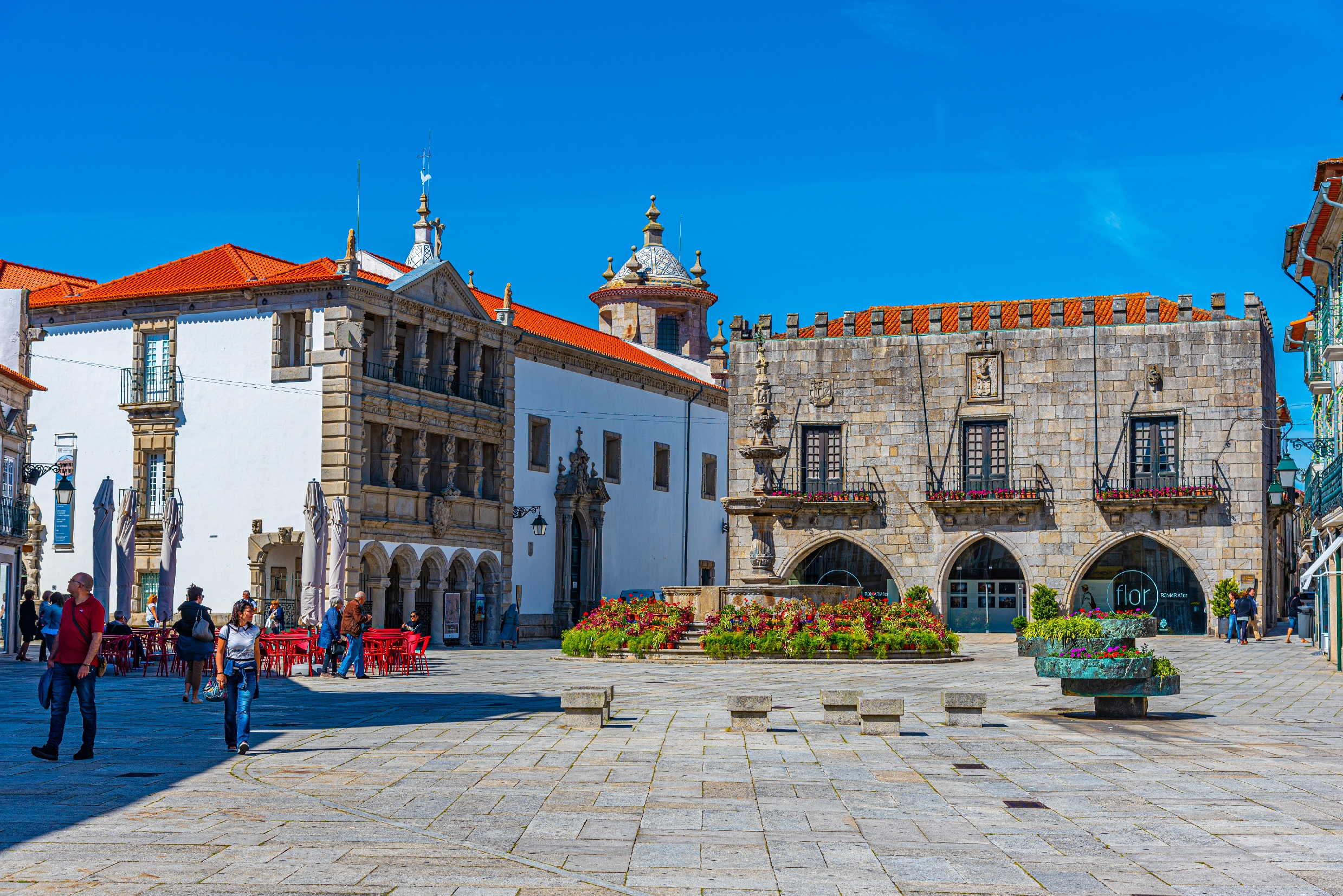
Viana do Castelo

Viana do Castelo: from the historic centre to the river
With a different scale from the previous three cities, Viana do Castelo makes it easy to connect the historic centre with the riverfront on foot. Praça da República is a natural starting point for exploring the streets of the centre, noticing the city's architecture and then continuing towards the Lima.
The walk can continue along the river, where the urban landscape gradually begins to open up. The Atlantic is close by, and this relationship between the historic centre, river and sea sets Viana apart from other Portuguese city destinations. To reach the Sanctuary of Santa Luzia, above the city, the funicular is worth considering — saving your legs for further exploring afterwards.
One possible walking route:
Praça da República → historic centre → riverfront → Gil Eannes Hospital Ship
Coimbra: a city of hills, history and academic life
In Coimbra, walking helps make sense of the city's geography. Baixa stretches close to the Mondego, while the University occupies the upper part of the city, creating a route where streets, steps and arches accompany the climb through different periods of Coimbra's history.
Starting in Baixa, you can walk through the commercial streets and climb towards the Old Cathedral and the University of Coimbra. The route requires some effort, but the distances make it possible to explore without turning the day into a series of journeys on public transport. From the university area, heading back towards the Mondego offers another perspective on the city.
One possible walking route:
Coimbra Baixa → Arco de Almedina → Old Cathedral → University of Coimbra → Botanical Garden
WHICH CITY SHOULD YOU CHOOSE? Four cities, four different ways to explore on footLisbon Porto Coimbra Viana do Castelo |
Where you stay matters when exploring a city on foot
If you plan to spend much of your trip walking, the location of your hotel deserves a place in the planning too. Starting the day close to the centre, a neighbourhood you want to discover or one of the main walking routes reduces time spent getting around and makes it easier to return to the hotel during the day without reorganising the entire itinerary.
Lisbon, Porto, Coimbra and Viana do Castelo also show that there is no single formula for a walkable city. There are hills, compact historic centres, riverbanks and streets that naturally make you slow down. What they have in common is simple: in all four, an important part of the trip happens on the way from one place to the next.
Related articles
-

- Cities
- Getaways
Where to go in Portugal in April: cities and spring getaways
April changes the way Portugal invites you to travel. The days begin to draw you outdoors, but a get…
27 Mar 2026 -

- Cities
How Many Days in Porto? What Changes After the Second Night
Are two nights enough to explore Porto? It depends on the kind of trip you have in mind. Over a week…
05 Feb 2026 -

- Cities
Already Know Lisbon, Porto or Funchal? What to Discover on a Second Visit
Returning to a city changes the way you explore it. Once you have seen the essential sights, Lisbon,…
20 Jan 2026


