



Where to stay in Portugal this summer: what really makes the difference
Where to stay in Portugal in summer also depends on how you want to spend your days. Between Lisbon, Porto, Lagos and Funchal, location can determine how much you walk, how often you need transport and even how easy it is to return to your hotel in the middle of the day. Four destinations, four different ways to plan a summer stay.
Lisbon : a city where staying close makes a difference
In Lisbon, the location of your hotel can easily shape the rhythm of the day. The city is hilly, distances are not always as short as they appear on a map and, during summer, crossing the city several times a day can become impractical.
Staying in a central area makes it easier to organise the day differently: head out early, explore part of the city on foot, return to the hotel during the hottest hours and go out again as the afternoon begins to cool. Baixa and Chiado place much of the historic centre nearby, while other well-connected neighbourhoods make it possible to combine different parts of the city without spending the day travelling between them.
WHAT CHANGES IN PRACTICE Lisbon in the morning. A break during the hottest hours. Back into the city in the late afternoon. |
Porto : a compact city, but full of hills
In Porto, many distances look short on a map. The city's topography tells a different story. The descents towards the Douro and the climbs on the way back are part of exploring Porto and make location particularly relevant on warmer days.
A base close to the historic centre allows several parts of the city to connect naturally: start in Baixa, walk down to Ribeira, cross the Luís I Bridge and continue into Gaia. Instead of treating each place as a separate journey, the route itself becomes part of the day.
WHAT CHANGES IN PRACTICE Baixa. Ribeira. The Douro. Gaia. |
-
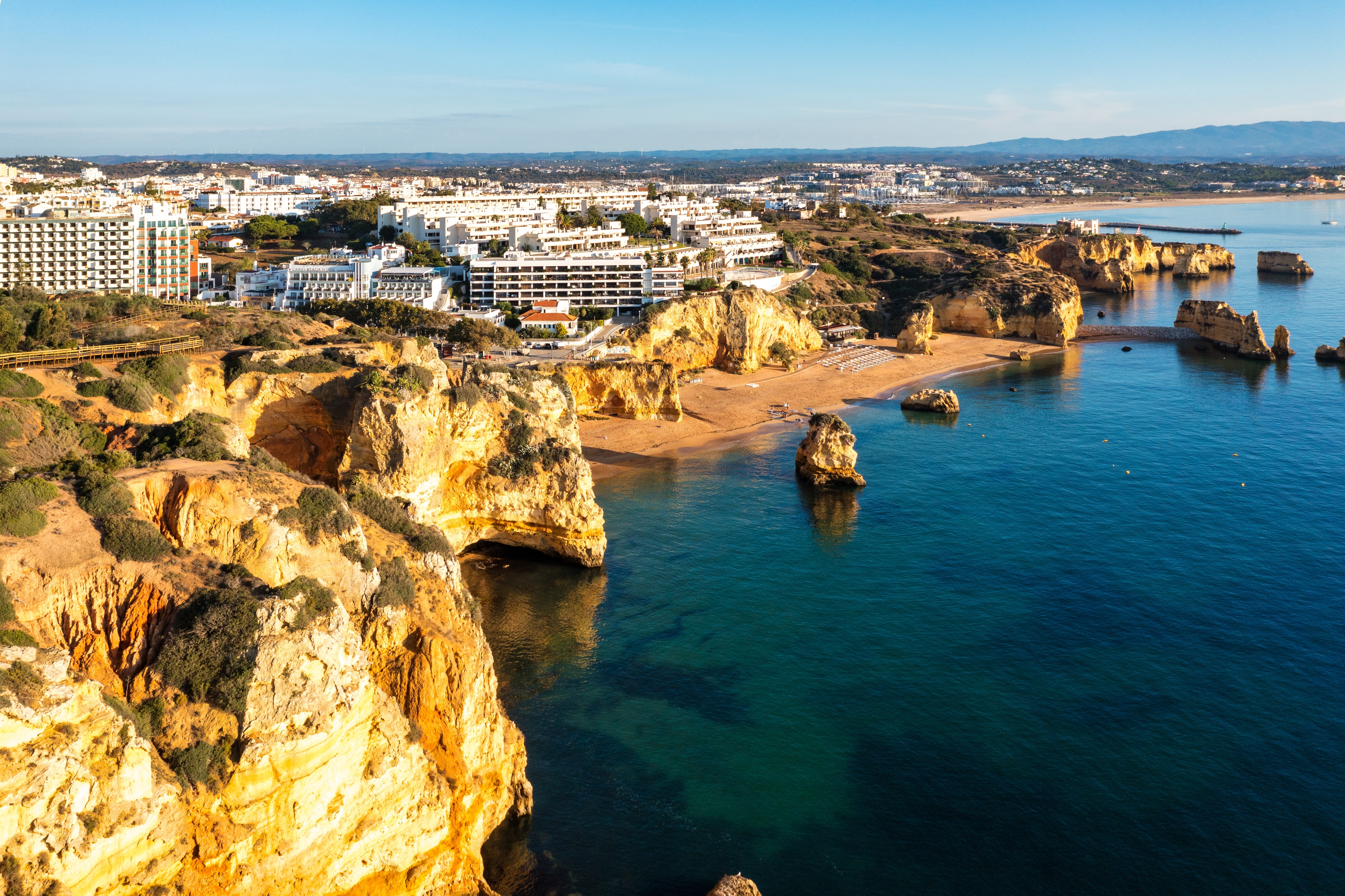
Praia De Dona Ana Lagos Algarve Portugal

Lagos (Algarve): between the beach and the city
In the Algarve, where you choose to stay can significantly change the experience of an August holiday. In some areas, almost every journey ends up depending on a car; elsewhere, beaches, restaurants and city life are close enough to make each day much simpler.
In Lagos, it is possible to combine both sides of the trip. The beaches and Ponta da Piedade put the coast at the heart of summer days, while the historic centre adds restaurants, shops and streets to explore once you leave the beach.
WHAT CHANGES IN PRACTICE Beach in the morning. Historic centre in the late afternoon. Dinner in town. |
Funchal : city, Atlantic and an island to explore
Madeira may not be the first place that comes to mind when planning a summer holiday in Portugal, but it offers a combination that is difficult to replicate on the mainland. In Funchal, mornings can be spent in the city, the Atlantic is present throughout much of the day and other parts of the island are close enough to create very different plans during the same stay.
The area you choose also influences the rhythm of the holiday. Staying in the centre puts markets, gardens, restaurants and historic streets nearby; the Ajuda area brings the sea and promenade into everyday life. In either case, Funchal works well as a base for discovering Madeira without having to change hotels.
WHAT CHANGES IN PRACTICE City in the morning. Atlantic in the afternoon. Madeira beyond Funchal whenever you feel like exploring. |
Before choosing a hotel, look at the real distances
On a map, two hotels can look equally well located. In August, the difference becomes clear when it is time to head out, return or change plans halfway through the day.
Heat, traffic, hills and larger numbers of visitors can change the way you move around a destination. A short distance on a map may turn into an uncomfortable walk or a journey that ends up shaping the rest of the day.
BEFORE YOU BOOK Imagine an ordinary day during your holiday. 01 Can I leave the hotel on foot? The beach, restaurants, historic centre or the places where you plan to spend much of your time should be easy to reach. 02 Can I easily return in the middle of the day? Being able to return for a rest, change clothes or avoid the hottest hours can make a noticeable difference to the pace of the holiday. 03 Will I need a car for everything? If every lunch, beach or walk requires a journey, part of the holiday will inevitably be spent in transit. |
So, where should you stay in Portugal in summer?
The answer depends on the kind of days you have in mind. Lisbon and Porto suit stays where much of the city can be explored on foot. Lagos makes it easy to alternate between the beach and the city. Funchal brings together city life, the Atlantic and access to different landscapes across Madeira.
Before booking, imagine an entire day starting from the hotel: where you would have breakfast, how long it would take to reach the beach or city centre, where you might have dinner and how easy it would be to return to your room in the late afternoon. These may be small distances, but you repeat them every day of the holiday.
WHERE TO STAY THIS SUMMER Start with the kind of days you want to have. A city within walking distance, a beach nearby, the Atlantic outside your window or a hotel that makes it easy to return in the middle of the day. Discover The Editory Collection Hotels across Portugal. |
Related articles
-

- Travel Guides
Coimbra in 2 Days: An Itinerary Through History, Flavours and the Mondego
From the heights of the University to the banks of the Mondego, Coimbra is a city shaped by history,…
01 Sept 2026 -

- Travel Guides
The Algarve Many Visitors Never Discover: 5 Experiences Beyond the Beaches
When people think of the Algarve, beaches, dramatic cliffs and boat trips are usually the first thin…
21 Jul 2026

